So You're Posted to CASG - Part I
Yay…

Yay…
Hangar 46, the Air and Space Power Centre's podcast for the Royal Australian Air Force is now LIVE.
The nature of war demands attention to the human factor above any other single factor.
There is a wave of digital transformation disrupting industries globally.
For many Australian Defence Force members, their youth was spent in either Air Force, Army or Navy Cadets; and for some of our Air and Space Power
In 2016, the Australian Defence Force (ADF) Defence Aviation Safety Regulations (DASR) came into being, in part to harmonise with the Australian Wo
Congratulations to Amy Hestermann-Crane and Amanda Gosling Clarke on being the recipients of the Corporal Margaret Clarke Award and The Wrigley Prize.
The Air and Space Power Centre work with a range of stakeholders and we are proud of our close relationship with EDGY AF.
Rethinking Air Superiority - Towards an Integrated Framework for Modern AirpowerKazunobu SakumaJapan Air Self-Defence ForceFor over a&nbs
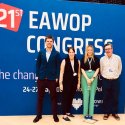
Squadron Leader Sal Knox recently presented her study on High-Reliability Followership in the Military at the 21st European Association of Work and Organisational Psychology (EAWOP) Conference in Katowice, Poland. The EAWOP conference serves as a platform for academics from around the world to share their research on people, work, and organisations.