What Can the ADF Learn From Ukraine's Air Defences?
What Can the ADF Learn From Ukraine's Air Defences?Kurt SimmillAustralian Defence ForceWhen Russia invaded Ukraine in Febr

For several decades, the relationship between Australia and India seemed limited to Commonwealth, cricket and curry.
Introduction
Evolution of Air Bases - Darwin Revisted
David Miller
Australian Defence Force
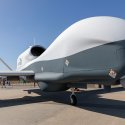
This time last year, in my first gig as a reservist, I had the pleasure of presenting to the 20th Australian International Aerospace Congress (AIAC20) on the topic of the MQ-4C Triton airworthiness program. Specifically, I spoke about how it had been structured in lieu of any formal recognition of the United States (US) Navy as a competent design organisation for Uncrewed Aerial Systems (UAS) or any formal airworthiness certification of the design basis for the Triton system itself.
Navigating Challenges in Australia's Defence Strategy: Enhancing Deterrence Through Cultural IntelligenceShane IvimeyAustralian Defence ForceThis b
Technology usually follows a certain progression – first the device gets more features before it reduces in size. Unmanned Aerial Vehicles (UAVs) fill this description perfectly, and we have yet to come up with an adequate defence for them.
The Temptation To Go Beyond Conventional Long-Range Strike
Daniel Cook
Australian Defence Force
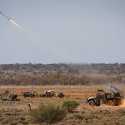
Access to foreign bases has long been a critical enabler of the ADF, and ongoing access will be key to Australia’s future security. In the past, these Forward Operating Bases (FOB) were considered relatively secure, however continual improvements to the range and accuracy of missiles acquired by adversarial militaries have made these bases attractive targets, being the seemingly soft underbelly of western militaries.
In order to continue utilisation of FOBs, and to guarantee the safety of deployed forces, the ADF cannot remain idle to the threat of advanced air and missile attacks. As such Australia must look to develop its Air and Missile Defence (AMD) capabilities in order to remain secure in future operations.
The aim of the essay is to discuss a range of AMD design and operating concepts to inform the development of an ADF Integrated AMD (IAMD) capability.
This essay will be structured into four key areas: western nations’ historical and future reliance on FOBs to project power; the emerging threat of powerful state and non-state actors; Australia’s response to emerging air and missile threats; and, IAMD design and operational concepts in an Australian context.
Abstract