  • Ministers
  • Navy
  • Army
  • Air Force
  • Department
Home

Main navigation

  • Air/Space Blog
  • Events
  • Education
  • Videos
  • Publications
  • Discover
  • Journal Contemporary Issues in Air and Space Power
  • Journal Air Power Studies 1990-2020

Secondary navigation

  • About
  • News
  • Contact Us
  • Contribute
  • Hangar 46
  • Search
  1. Home
  2. Discover
  3. Related items

Related items

Items related to:

CPL Margaret Clarke Writing Award
Air/Space
27 May 2026
Foundation

Sustaining Communications Across a Degraded Network

Sustaining Communications Across a Degraded NetworkSteven CrawfordAustralian Defence ForceThe increase in interconnected systems within the Royal A

By
Steven Crawford
The engagement area for the live firing of Australian Army and United States Marine Corps M777 Howitzers in the Pyri Pyri ranges during a fire power demonstration at Shoalwater Bay Training Area during Exercise Talisman Sabre 2025.
Air/Space
27 May 2026
Foundation

Applying Wylie's Cumulative and Sequential Patterns to Air Operations

Applying Wylie's Cumulative and Sequential Patterns to Air OperationsPeter Layton

By
Peter Layton
Australian Army officer Lieutenant Jackson Say from 3rd Combat Engineer Regiment, reads command notes on a map during a live fire M58 Mine Clearing Line Charge (MICLIC) Serial at Townsville Field Training Area, Queensland, on 06 September 2025.
Air/Space
22 Jun 2026
Developing

Applying Wylie’s Cumulative and Sequential Patterns to Air Operations

Strategist Joseph Caldwell Wylie argued that strategies were implemented through two general types of operational patterns: (1) cumulative warfare, which involves “a collection of lesser actions” where tactical actions gradually built up to have strategic impact; and (2) sequential warfare, which is “a series of discrete steps” where each lead to the next; an example being the island hopping campaign across the Pacific during World War Two.

By
Peter Layton
F-35
Air/Space
27 Oct 2021
Developing

A Question of Choice and Strategy: Australia’s F-35 Acquisition

Limited by resources and size the F-35 was the best, and largely only, option available to the ADF that guaranteed long term defense interests.

By
Jack Ryan
Preparedness and Repairable Item Management
Publication
Air Power Fellow Series
15 Jun 1994
Advanced

Preparedness and Repairable Item Management

The aim of this fellowship was to identify opportunities to improve RAAF preparedness through Repairable Item (RI) management, and to recommend means of pursuing these opportunities.

By
Michelle Maclean
CAF talking to personnel
Air/Space
22 Feb 2022
Developing

Self-Mastery to National Power

The Background

By
Alex Clarke
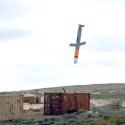
A Tomahawk Weapon System fired from HMAS Brisbane off the coast of San Diego, USA, moments before impacting it's target. Screenshot from video capture.
Air/Space
01 May 2026
Foundation

Middle Power Offensive Air Operations: Insights from Operation Rising Lion

Unlike defensive air operations which are reactive, offensive air operations are undertaken where and when an air force chooses.

By
Peter Layton
Green chalkboard with text over the top saying "marketing" boldly with a mixture of other words in a darker colour. Mesh pot of colour pencils sits on the right hand lower side
Air/Space
08 Jun 2023
Foundation

So You're Posted to CASG - Part III

Welcome once again back on the rollercoaster!

By
David Turnbull
1RTU on parade 2023
Air/Space
03 Aug 2023
Developing

Is The RAAF Seeking Combat Effectiveness

Is The RAAF Seeking Combat Effectiveness

Daniel Cook
Australian Defence Force

 

By
Daniel Cook
Historical former RAAF Meteor jet fighter aircraft.
Air/Space
09 Jul 2026
Developing

Book Review: Why Air Forces Fail: The Anatomy of Defeat

In Why Air Forces Fail: The Anatomy of Defeat (Higham & Harris, 2016), historians Robin Higham and Stephen Harris assemble a team of experts to investigate examples of failure and defeat in the application of air power. Overall, Why Air Forces Fail is an interesting and important book because it analyses the reasons why air forces have suffered defeat and failure. It draws some important lessons in this regard, and it provides an excellent resource for those studying air power.

By
David Hood
274 Results found

Pagination

  • First page
  • Previous page
  • …
  • 8
  • 9
  • 10
  • 11
  • 12
  • …
  • Next page
  • Last page

Follow

  • Twitter
  • LinkedIn
  • Youtube

Explore

  • Air/Space Blog
  • Education
  • Videos
  • Publications
  • Academic Journal CIASP
  • Academic Journal Air Power Studies
  • About
  • News
  • Contact
  • Contribute
  • Discover

Contribute

If you’d like to contribute to the Air/Space blog, ASPC's longer-form publications; or ASPC's seminars, we’d like to hear from you.

Contribute
  • Copyright © Air and Space Power Centre
  • Disclaimer
  • Privacy Policy
  • Sitemap
  • Terms and Conditions
  • About
    • Resources
  • News
  • Contact Us
  • Contribute
    • Propose a Topic
    • Submit a Research Proposal
  • Hangar 46
  • Search
  • Air/Space Blog
  • Events
  • Education
    • Air and Space Power In a Box
    • Air and Space Power in a Box - Lite
    • Leader Enrichment Program
    • Clear to Launch: Junior Aviator Symposium
  • Videos
  • Publications
    • Air/Space
    • Doctrine
    • Monograph
  • Discover
    • Discover Search
  • Journal Contemporary Issues in Air and Space Power
  • Journal Air Power Studies 1990-2020