• Ministers
  • Navy
  • Army
  • Air Force
  • Department
Home

Main navigation

  • Air/Space Blog
  • Events
  • Education
  • Videos
  • Publications
  • Discover
  • Journal Contemporary Issues in Air and Space Power
  • Journal Air Power Studies 1990-2020

Secondary navigation

  • About
  • News
  • Contact Us
  • Contribute
  • Hangar 46
  • Search
  1. Home
  2. Discover
  3. Related items

Related items

Items related to:

Conventional Deterrence and National Security
Publication
Air Power Fellow Series
01 Apr 1997
Master

Conventional Deterrence and National Security

Deterrence existed long before nuclear weapons were invented and has been a feature of relations between antagonistic tribes and states since such relationships first existed. The concept of deterrence, convincing an adversary not to carry out an undesirable action by threatening them with harm, is widely understood and applied in military and nonmilitary contexts.


By
John Harvey
Postmodern Tactical Air Intelligence
Publication
Beyond the Future Force
01 Jun 2006

Postmodern Tactical Air Intelligence

Tactical Air Intelligence will face a crisis of relevance in conflicts of the future.

By
Byron Reynolds
The engagement area for the live firing of Australian Army and United States Marine Corps M777 Howitzers in the Pyri Pyri ranges during a fire power demonstration at Shoalwater Bay Training Area during Exercise Talisman Sabre 2025.
Air/Space
27 May 2026
Foundation

Applying Wylie's Cumulative and Sequential Patterns to Air Operations

Applying Wylie's Cumulative and Sequential Patterns to Air OperationsPeter Layton

By
Peter Layton
Australian Army officer Lieutenant Jackson Say from 3rd Combat Engineer Regiment, reads command notes on a map during a live fire M58 Mine Clearing Line Charge (MICLIC) Serial at Townsville Field Training Area, Queensland, on 06 September 2025.
Air/Space
22 Jun 2026
Developing

Applying Wylie’s Cumulative and Sequential Patterns to Air Operations

Strategist Joseph Caldwell Wylie argued that strategies were implemented through two general types of operational patterns: (1) cumulative warfare, which involves “a collection of lesser actions” where tactical actions gradually built up to have strategic impact; and (2) sequential warfare, which is “a series of discrete steps” where each lead to the next; an example being the island hopping campaign across the Pacific during World War Two.

By
Peter Layton
Pathway to the Stars Cover
Publication
Stand Alone Publication / Monograph
26 Apr 2021

Pathway to the Stars

Pathway to the Stars outlines how ASPC will position itself and commence delivery of the directed mission during the formative years through Initial, and then Final Operating Capability

By
Air and Space Power Centre
Four people standing in front of a blue media wall with white text saying 21st EAWOP Congress
News
27 Jun 2023

Is Leadership All We Need?

Squadron Leader Sal Knox recently presented her study on High-Reliability Followership in the Military at the 21st European Association of Work and Organisational Psychology (EAWOP) Conference in Katowice, Poland. The EAWOP conference serves as a platform for academics from around the world to share their research on people, work, and organisations.

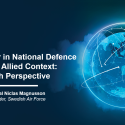
Digital Image Created for Slide of Air Power in National Defence Within an Allied Context: A Swedish Perspective
Video
Conferences
17 Mar 2026

Air and Space Power Conference 2026: 'Air Power in National Defence Within an Allied Context: A Swedish Perspective' Brigadier-General Niclas Magnusson

The Air and Space Power Conference 2026 addressed the topic of air and space power in national defence.

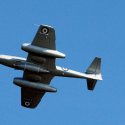
Historical former RAAF Meteor jet fighter aircraft.
Air/Space
09 Jul 2026
Developing

Book Review: Why Air Forces Fail: The Anatomy of Defeat

In Why Air Forces Fail: The Anatomy of Defeat (Higham & Harris, 2016), historians Robin Higham and Stephen Harris assemble a team of experts to investigate examples of failure and defeat in the application of air power. Overall, Why Air Forces Fail is an interesting and important book because it analyses the reasons why air forces have suffered defeat and failure. It draws some important lessons in this regard, and it provides an excellent resource for those studying air power.

By
David Hood
318 Results found

Pagination

  • First page
  • Previous page
  • …
  • 9
  • 10
  • 11
  • 12
  • 13
  • …
  • Next page
  • Last page

Follow

  • Twitter
  • LinkedIn
  • Youtube

Explore

  • Air/Space Blog
  • Education
  • Videos
  • Publications
  • Academic Journal CIASP
  • Academic Journal Air Power Studies
  • About
  • News
  • Contact
  • Contribute
  • Discover

Contribute

If you’d like to contribute to the Air/Space blog, ASPC's longer-form publications; or ASPC's seminars, we’d like to hear from you.

Contribute
  • Copyright © Air and Space Power Centre
  • Disclaimer
  • Privacy Policy
  • Sitemap
  • Terms and Conditions
  • About
    • Resources
  • News
  • Contact Us
  • Contribute
    • Propose a Topic
    • Submit a Research Proposal
  • Hangar 46
  • Search
  • Air/Space Blog
  • Events
  • Education
    • Air and Space Power In a Box
    • Air and Space Power in a Box - Lite
    • Leader Enrichment Program
    • Clear to Launch: Junior Aviator Symposium
  • Videos
  • Publications
    • Air/Space
    • Doctrine
    • Monograph
  • Discover
    • Discover Search
  • Journal Contemporary Issues in Air and Space Power
  • Journal Air Power Studies 1990-2020