Pathfinder Collection Volume 5
Since June 2004 the Air Power Development Centre has published the fortnightly Pathfinder bulletins, ranging across contemporary and historical air

Turning the Tap Off - Stopping the Flow of Pointless Jobs in the RAAFDaniel CookAustralian Defence Force
Effective realisation of national power in support of Australia’s national interests requires all Aviators to have a clear understanding of their c
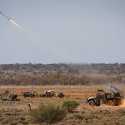
Access to foreign bases has long been a critical enabler of the ADF, and ongoing access will be key to Australia’s future security. In the past, these Forward Operating Bases (FOB) were considered relatively secure, however continual improvements to the range and accuracy of missiles acquired by adversarial militaries have made these bases attractive targets, being the seemingly soft underbelly of western militaries.
In order to continue utilisation of FOBs, and to guarantee the safety of deployed forces, the ADF cannot remain idle to the threat of advanced air and missile attacks. As such Australia must look to develop its Air and Missile Defence (AMD) capabilities in order to remain secure in future operations.
The aim of the essay is to discuss a range of AMD design and operating concepts to inform the development of an ADF Integrated AMD (IAMD) capability.
This essay will be structured into four key areas: western nations’ historical and future reliance on FOBs to project power; the emerging threat of powerful state and non-state actors; Australia’s response to emerging air and missile threats; and, IAMD design and operational concepts in an Australian context.
As a comic-book fan, I’ve always been curious about who might win in a battle between DC’s Justice League and Marvel’s Avengers.
Navigating Challenges in Australia's Defence Strategy: Enhancing Deterrence Through Cultural IntelligenceShane IvimeyAustralian Defence ForceThis b
What Can the ADF Learn From Ukraine's Air Defences?Kurt SimmillAustralian Defence ForceWhen Russia invaded Ukraine in Febr
Deterrence existed long before nuclear weapons were invented and has been a feature of relations between antagonistic tribes and states since such relationships first existed. The concept of deterrence, convincing an adversary not to carry out an undesirable action by threatening them with harm, is widely understood and applied in military and nonmilitary contexts.
Defence forces worldwide need to transform their air forces into organisations that can accommodate 5th generation air power technologies in joint
The Four-Day Near-Peer Air WarPeter LaytonGriffith University and Australian Defence ForceIn May 2025, India and Pakistan fought a near-peer air wa