2022 Air and Space Power Conference Proceedings
The Air and Space Power Conference held in March earlier this year at the National Convention Centre Canberra, has been awarded the EventsAir 2022

As a platform for addressing current and prospective regional security concerns, this book provides a valuable contribution to exploring ideas and furthering dialogue in an area of vital concern to future regional security
Rethinking Air Superiority - Towards an Integrated Framework for Modern AirpowerKazunobu SakumaJapan Air Self-Defence ForceFor over a&nbs
Unlike defensive air operations which are reactive, offensive air operations are undertaken where and when an air force chooses.
The final panel of the Chief of Air Force Symposium 2023 is focussed on the space domain, and ways of boosting our capabilities in space.
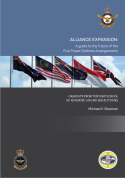
This book examines three alliances to determine the lessons learned that can apply to a possible future expansion of the Five Power Defence Arrange
Ever wondered what the rest of the Air Force does when you are doing your Job.
Laura Pearson proposes an innovative way to break down the knowledge gap and enhance Air Force workforce effectiveness. Get engaged in the conversation
How well do Commanders know Aviator's understanding of National Power? Is there a knowledge gap? Does it matter?
The Royal Australian Air Force (RAAF) is changing.
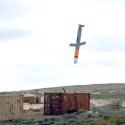
Access to foreign bases has long been a critical enabler of the ADF, and ongoing access will be key to Australia’s future security. In the past, these Forward Operating Bases (FOB) were considered relatively secure, however continual improvements to the range and accuracy of missiles acquired by adversarial militaries have made these bases attractive targets, being the seemingly soft underbelly of western militaries.
In order to continue utilisation of FOBs, and to guarantee the safety of deployed forces, the ADF cannot remain idle to the threat of advanced air and missile attacks. As such Australia must look to develop its Air and Missile Defence (AMD) capabilities in order to remain secure in future operations.
The aim of the essay is to discuss a range of AMD design and operating concepts to inform the development of an ADF Integrated AMD (IAMD) capability.
This essay will be structured into four key areas: western nations’ historical and future reliance on FOBs to project power; the emerging threat of powerful state and non-state actors; Australia’s response to emerging air and missile threats; and, IAMD design and operational concepts in an Australian context.