Air Power Seminar: Australian Defence Space Projects
Like any modern military, the Australian Defence Force is reliant upon space capabilities to conduct global, connected and precise military operati
The 2024 Air and Space Power Conference focuses on building air and space power capability in the context of the ADF’s capstone concept, integrated
When I was younger, I was very black and white in my thinking. Many would argue that I still am! Although I am finding the beauty in shades of grey (don’t say it!). Yet despite trying to grow my empathy and to appreciate the differences of thoughts for the constructive challenges and opportunity for growth – I still fall into the trap of comfort. I don’t always want to deal with people whose views I find offensive, idiotic, or more often than not – both. So despite being aware of the echo chamber phenomena, and its dangers, I wilfully stay with my chamber to learn and hear voices I already agree with, already support, and think very similar to myself. Is that so wrong?
The 2024 Air and Space Power Conference focuses on building air and space power capability in the context of the ADF’s capstone concept, integrated
All three Services of the Australian Defence Force plan to add additive manufacturing capabilities and capacity across their existing operations.
The current RAAF organizational structure is top-heavy, unbalanced and too compartmentalized. This results in stove piped training, which inhibits high-end, networked and integrated joint collective training.
The Air and Space Power Centre will launch "Air/Space" in early 2021, an open-source blog that will be hosted on our website.
Our next seminar by will delivered by Mr Darin Lovett.
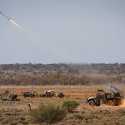
Access to foreign bases has long been a critical enabler of the ADF, and ongoing access will be key to Australia’s future security. In the past, these Forward Operating Bases (FOB) were considered relatively secure, however continual improvements to the range and accuracy of missiles acquired by adversarial militaries have made these bases attractive targets, being the seemingly soft underbelly of western militaries.
In order to continue utilisation of FOBs, and to guarantee the safety of deployed forces, the ADF cannot remain idle to the threat of advanced air and missile attacks. As such Australia must look to develop its Air and Missile Defence (AMD) capabilities in order to remain secure in future operations.
The aim of the essay is to discuss a range of AMD design and operating concepts to inform the development of an ADF Integrated AMD (IAMD) capability.
This essay will be structured into four key areas: western nations’ historical and future reliance on FOBs to project power; the emerging threat of powerful state and non-state actors; Australia’s response to emerging air and missile threats; and, IAMD design and operational concepts in an Australian context.
Education is highly valued in the Air Force, with the acquisition of highly specialised skills and expertise being an integral component of one's career progression. Training comes in various forms, including mandatory, specialist, on-the-job, and professional military education. In addition to these forms of training, members of the Air Force have access to opportunities for scholarship, where they can apply for graduate programs at Masters and PhD level through civilian universities. These programs afford individuals the chance to focus on a particular "problem" for Defence, dedicating an extended period of time to research and scholarship.