This seminar addresses the morality of using armed and remotely-piloted aircraft (‘drones’) when ‘drone violence’ is conceptualised as violence dev
R1 - Ground
Russell, ACT
- Christian Enemark
This seminar addresses the morality of using armed and remotely-piloted aircraft (‘drones’) when ‘drone violence’ is conceptualised as violence dev
Train like we fight, fight like we train.
Access to foreign bases has long been a critical enabler of the ADF, and ongoing access will be key to Australia’s future security. In the past, these Forward Operating Bases (FOB) were considered relatively secure, however continual improvements to the range and accuracy of missiles acquired by adversarial militaries have made these bases attractive targets, being the seemingly soft underbelly of western militaries.
In order to continue utilisation of FOBs, and to guarantee the safety of deployed forces, the ADF cannot remain idle to the threat of advanced air and missile attacks. As such Australia must look to develop its Air and Missile Defence (AMD) capabilities in order to remain secure in future operations.
The aim of the essay is to discuss a range of AMD design and operating concepts to inform the development of an ADF Integrated AMD (IAMD) capability.
This essay will be structured into four key areas: western nations’ historical and future reliance on FOBs to project power; the emerging threat of powerful state and non-state actors; Australia’s response to emerging air and missile threats; and, IAMD design and operational concepts in an Australian context.
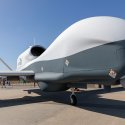
This time last year, in my first gig as a reservist, I had the pleasure of presenting to the 20th Australian International Aerospace Congress (AIAC20) on the topic of the MQ-4C Triton airworthiness program. Specifically, I spoke about how it had been structured in lieu of any formal recognition of the United States (US) Navy as a competent design organisation for Uncrewed Aerial Systems (UAS) or any formal airworthiness certification of the design basis for the Triton system itself.
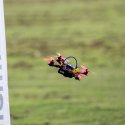
The 'poor man's air force' is a term for employing commercial off-the-shelf (COTS) hobbyist drones or uncrewed aerial systems (UAS) to strategic level military effect, and that effect cannot be understated (Waters, 2018; Nadeau, 2022; Shift, 2023). The ability for terror organisations to coordinate multiple layers of effects, including using COTS drones, to destroy Command and Control (C2) nodes in Israel causes alarm. Couple this with the use of COTS drones for intelligence, surveillance, reconnaissance, strike and battle-damage assessment missions, and the threat posed by what are essentially toys is alarmingly real.
When I was younger, I was very black and white in my thinking. Many would argue that I still am! Although I am finding the beauty in shades of grey (don’t say it!). Yet despite trying to grow my empathy and to appreciate the differences of thoughts for the constructive challenges and opportunity for growth – I still fall into the trap of comfort. I don’t always want to deal with people whose views I find offensive, idiotic, or more often than not – both. So despite being aware of the echo chamber phenomena, and its dangers, I wilfully stay with my chamber to learn and hear voices I already agree with, already support, and think very similar to myself. Is that so wrong?
This presentation was a discussion on the growing interest in, and challenges with, Human-Machine Teaming (HMT).
Air Marshal Chipman, former Chief of the Air Force, announced on the eve of the 2023 Avalon Air Show that Australia needs to consider and invest in low-cost mass-produced (LCMP) drones.
Living and Thriving Under Ambiguity
Luke Houghton and Jennifer Loy
Griffith University
Lessons for the ADF from Operation Spider's WebKeirin Joyce, Joshua Vicino, Michael Spencer, and Matthew ChapmanAustralian Defence Force